

Path to Financial Freedom

Chante Denis • August 23, 2025

Image a company designed to help you navigate through the fears of financial uncertainty  

Good Debt vs. Bad Debt: How to Leverage Debt for Wealth-Building Opportunities


When most people hear the word “debt,” it sparks anxiety, fear, or even shame. Online discussions often warn us to “stay debt-free” at all costs. While being cautious with debt is wise, the reality is this: not all debt is created equal.


The difference between good debt and bad debt could determine whether your financial future is weighed down—or lifted into wealth.

---


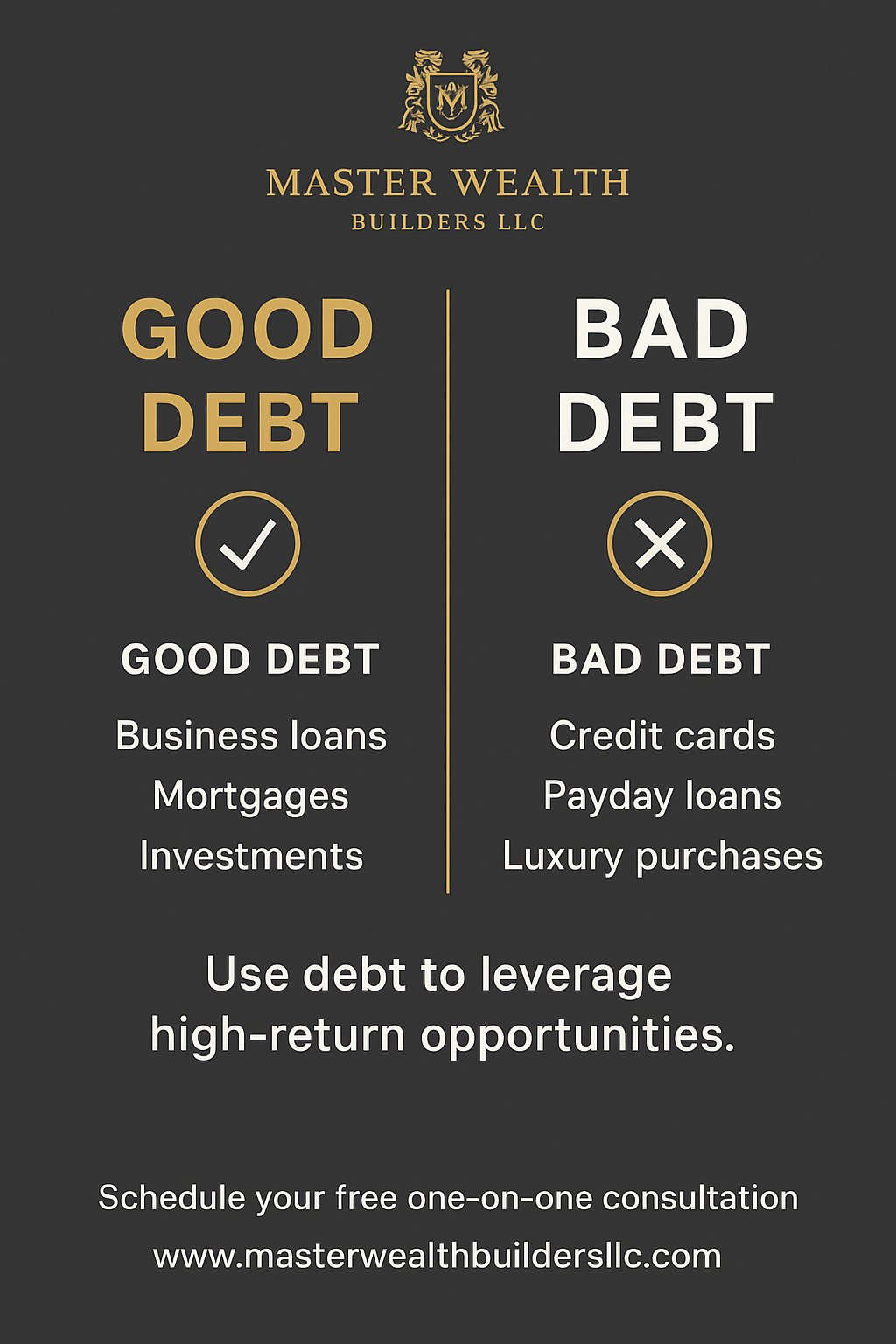
What Is Bad Debt?


Bad debt is money borrowed for things that depreciate in value or don’t create income. It drains your resources instead of fueling growth.


Examples of bad debt include:


  • High-interest credit cards used for lifestyle spending
  • Payday loans or quick cash advances
  • Financing luxury items that don’t hold long-term value


These types of debt can trap you in a cycle of payments with no return on your money.

---


What Is Good Debt?


Good debt, on the other hand, is money borrowed to create future income or appreciate in value. It’s the kind of debt that works for you, not against you. Examples of good debt include:


  • A business loan that funds operations and produces consistent revenue
  • A mortgage on rental property that generates positive cash flow
  • Leveraging funds or redirecting funds to invest in compounding interest accounts such as Fixed Index Annuities (FIAs) or Max Fund IULs


The key? Good debt opens the door to high-return opportunities that outpace the cost of borrowing.

---


Example: Using Debt as a Lever


Imagine you borrow $20,000 at 5% interest to invest in a vehicle that earns 8–10% annually.


Your cost of debt is 5%.


Your return on investment is 8–10%.


That 3–5% spread becomes profit you wouldn’t have had otherwise—this is the power of leverage. Over time, compounding magnifies that gain. Net zero loan. 

---


Why This Matters


If you only see debt as dangerous, you miss the chance to grow wealth strategically. The wealthy understand that debt is a tool: dangerous when misused, powerful when applied with knowledge and discipline.

---


The Master Wealth Builders Approach


At Master Wealth Builders LLC, our mission is to help you make fiscally responsible decisions today for the lifestyle you want tomorrow. We show clients how to:


  • Avoid the traps of bad debt
  • Leverage good debt into high-return strategies
  • Use compounding interest accounts to multiply wealth

---


 Ready to discover how you can turn debt into opportunity?


Schedule your free one-on-one consultation today:

 Book Your Session Here

https://propps.me/masterwealthbuilders


Share...

November 9, 2026
Discover how AI and cryptocurrency payment processing can improve business efficiency, reduce costs, automate operations, enhance customer experiences, and support long-term growth.

Hand holding a stylus over glowing business charts and analytics dashboard
November 3, 2026
Master Wealth Builders LLC is an education-first financial consulting firm led by TK Pryor, Wealth Strategist and Licensed Life Insurance Agent. It helps families, professionals, entrepreneurs, and business owners keep more of the money they make — and multiply more of the money they have— through coordinated retirement, insurance, tax, mortgage, and business strategy.

Glowing justice scales over a glass skyscraper at dusk in a modern city skyline
November 3, 2026
For modern business owners, the hardest decisions often come down to a constant tug-of-war: how do you maintain capital liquidity while simultaneously deploying enough cash to attract and retain top-tier talent? ​Most conventional financial advice treats these as competing interests. If you spend on elite employee benefits, your balance sheet shrinks. If you hoard cash to protect liquidity, you lose key executives to competitors. ​At Master Wealth Builders LLC, we reject this retail mindset. We help scaling enterprises implement institutional-grade financial strategies that solve both problems simultaneously—without disrupting cash flow. ​By restructuring how your business leverages capital and manages employee wellness, you can transform standard corporate expenses into wealth-building engines. Here is the framework we use to optimize our clients' capital and benefits architecture.

Calculator, eyeglasses, pen, and chart papers on a desk with a plant
September 30, 2026
Learn how to calculate your net worth using a simple assets-minus- liabilities formula. See two examples, common mistakes, tracking tips, and free online calculators.

Nested money-supply layers showing cash, bank deposits,
and institutional near-money assets.
By Chante Denis • September 29, 2026
What is the difference between M2 and M3 money supply? Learn what each includes, how liquidity works, how Fed QE and QT affect financial conditions, why the Fed stopped publishing M, and how the ECB defines M.

Jasmine Rush
By Chante Denis • September 28, 2026
Meet Jasmine Rush, the Navy veteran behind Speaking From the Lens, Mission to Momentum, and Speaking Beyond the Lens—businesses built around storytelling, strategy, advocacy, and legacy.

By Manus AI • September 16, 2026
Compare public, private, permissioned, consortium, and hybrid blockchains across access, privacy, security, governance, cost, scalability, and use cases. Learn which architecture fits your organization.

When you deposit money into your bank account, have you ever wondered: Is my money just sitting...
By Chante Denis • January 22, 2026
Learn what fractional reserve banking is, how it works, and why it matters—explained in plain English with simple examples.
FIA returns explained
By Chante Denis • October 1, 2025
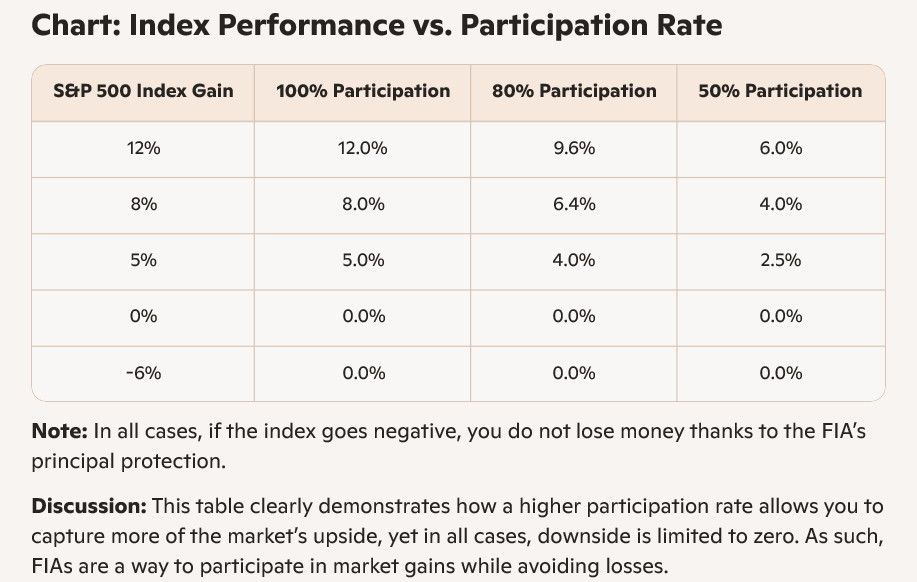
Key Takeaways - The participation rate determines how much of the index’s positive return your FIA credits you each year. - A higher participation rate means more upside growth, but it’s always paired with downside protection—your principal never shrinks due to market losses.
You earn when the market goes up, but you’re protected from losses when the market goes down.
By Chante Denis • September 28, 2025
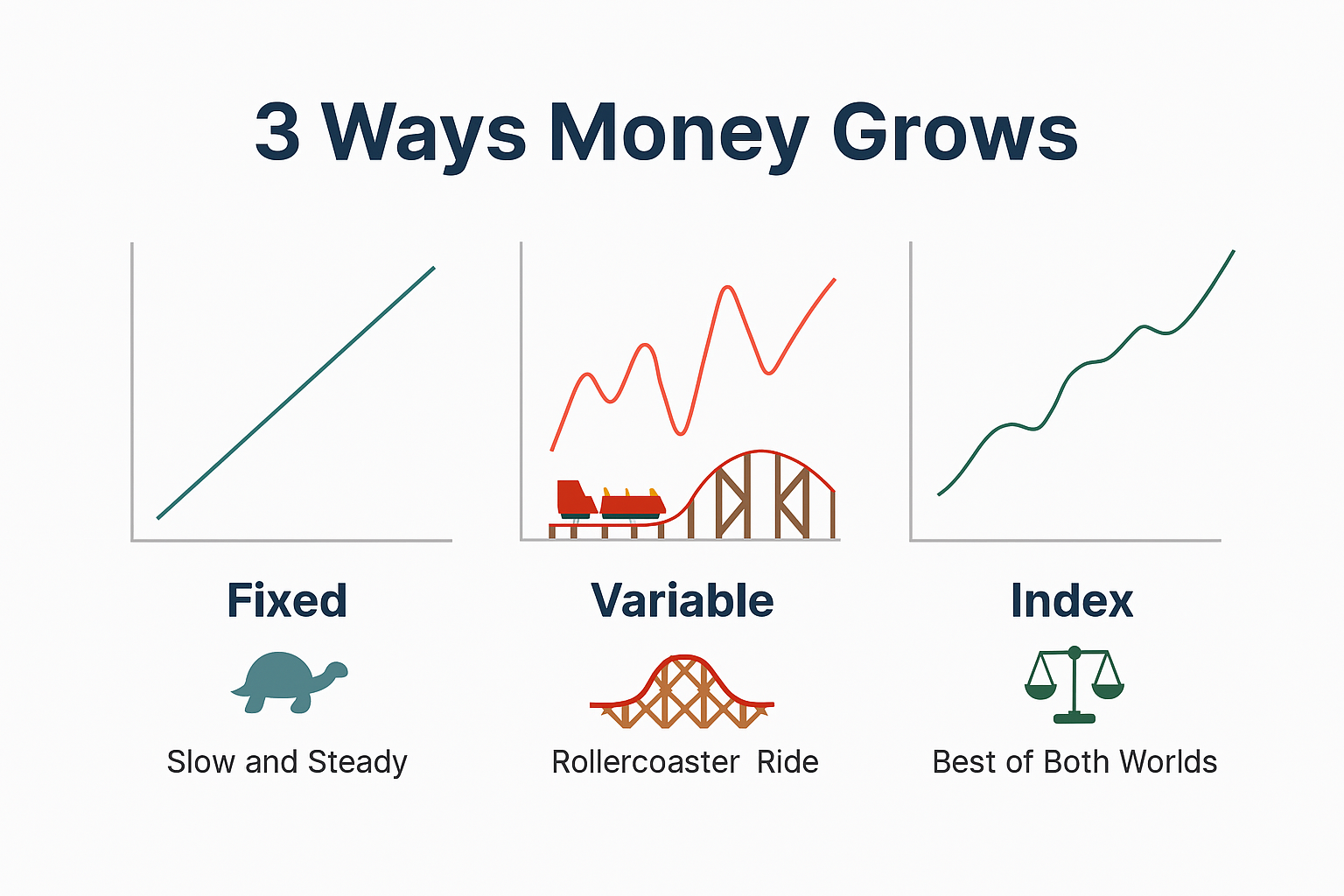
Imagine you’re climbing a mountain. With stocks, you can climb fast—but you risk falling off the cliff. With a savings account, you’re safe, but you barely move upward. With an FIA, you climb steadily, and if you slip, there’s a safety harness that prevents you from falling below where you started.
Show More