


Why Your Account Manager Won’t Tell You About Fixed Index Annuities

Chante Denis • August 31, 2025

Here’s a truth most investors never hear:

 your account manager likely won’t bring up Fixed Index Annuities (FIAs)—not because they don’t work, but because it’s not in their firm’s best interest. Let’s break down why.


On the Market vs. Off the Market


Your account manager is trained to keep your money “on the stock market.” That’s where their firm makes money—through management fees, commissions, and trading activity.


A Fixed Index Annuity, however, takes your money off the market. It’s not exposed to the daily rollercoaster of stocks. Instead, it ties growth to an index (like the S&P 500), without the risk of losing your principal during market downturns. For many firms, this is a conflict of interest—if your money isn’t in the market, they can’t charge fees on it.


Fees vs. No Fees


Think about it: an average managed investment account might charge you 1% or more in fees every year. That doesn’t sound like much, but on $500,000, that’s $5,000 annually—money you’ll never see again, whether the market is up or down.


By contrast, most FIAs are no-fee products. Your growth is linked to the market’s upside, but without ongoing “management” costs draining your account.


Principal Protection vs. Market Volatility


In a volatile market, even strong years can be wiped out by one bad crash. Lose 30% in one year, and it might take years of gains just to break even.


With a Fixed Index Annuity, you don’t lose your principal—ever. The worst-case scenario is 0% growth for the year, not a negative return. That “no loss” foundation gives your money the chance to compound steadily over the long term, which historically outpaces accounts exposed to repeated market downturns.


Tax-Deferred Growth vs. Fully Taxed Gains


Here’s another hidden benefit: FIAs grow on a tax-deferred basis. That means your money compounds faster because you aren’t paying taxes on gains every single year.


Contrast that with brokerage accounts: every trade, every dividend, every realized gain is a tax event. Uncle Sam takes his cut long before you see the long-term benefits.


Why You Don’t Hear This from Your Account Manager


Simple—most account managers aren’t licensed to talk about annuities. Only insurance-licensed professionals can explain or sell them. On top of that, if they did recommend an FIA, it would take money out of their firm’s fee-based system. That’s why you’ll almost never hear them suggest this path, even when it may be a smarter, safer option for your goals.


Example: Stock Market vs. FIA


Investor A: $100,000 in a managed stock account. Over 20 years, after fees and a few down years, the account grows but takes major hits along the way.


Investor B: $100,000 in a Fixed Index Annuity. No fees, no negative years. Growth compounds without setbacks. Even if Investor B’s annual growth is more modest, the power of avoiding losses typically results in a stronger balance long-term.


The Bottom Line


Fixed Index Annuities aren’t for everyone—but if you value principal protection, tax-deferred growth, and steady compounding without fees, they deserve a serious look.


Your account manager may not tell you about them. But we will.


 Schedule your free consultation today at: www.masterwealthbuildersllc.com.


We’ll walk you through how FIAs work, whether they fit your retirement strategy, and why sometimes the smartest move is the one Wall Street doesn’t talk about.


Share...

November 9, 2026
Discover how AI and cryptocurrency payment processing can improve business efficiency, reduce costs, automate operations, enhance customer experiences, and support long-term growth.

Hand holding a stylus over glowing business charts and analytics dashboard
November 3, 2026
Master Wealth Builders LLC is an education-first financial consulting firm led by TK Pryor, Wealth Strategist and Licensed Life Insurance Agent. It helps families, professionals, entrepreneurs, and business owners keep more of the money they make — and multiply more of the money they have— through coordinated retirement, insurance, tax, mortgage, and business strategy.

Glowing justice scales over a glass skyscraper at dusk in a modern city skyline
November 3, 2026
For modern business owners, the hardest decisions often come down to a constant tug-of-war: how do you maintain capital liquidity while simultaneously deploying enough cash to attract and retain top-tier talent? ​Most conventional financial advice treats these as competing interests. If you spend on elite employee benefits, your balance sheet shrinks. If you hoard cash to protect liquidity, you lose key executives to competitors. ​At Master Wealth Builders LLC, we reject this retail mindset. We help scaling enterprises implement institutional-grade financial strategies that solve both problems simultaneously—without disrupting cash flow. ​By restructuring how your business leverages capital and manages employee wellness, you can transform standard corporate expenses into wealth-building engines. Here is the framework we use to optimize our clients' capital and benefits architecture.

Calculator, eyeglasses, pen, and chart papers on a desk with a plant
September 30, 2026
Learn how to calculate your net worth using a simple assets-minus- liabilities formula. See two examples, common mistakes, tracking tips, and free online calculators.

Nested money-supply layers showing cash, bank deposits,
and institutional near-money assets.
By Chante Denis • September 29, 2026
What is the difference between M2 and M3 money supply? Learn what each includes, how liquidity works, how Fed QE and QT affect financial conditions, why the Fed stopped publishing M, and how the ECB defines M.

Jasmine Rush
By Chante Denis • September 28, 2026
Meet Jasmine Rush, the Navy veteran behind Speaking From the Lens, Mission to Momentum, and Speaking Beyond the Lens—businesses built around storytelling, strategy, advocacy, and legacy.

By Manus AI • September 16, 2026
Compare public, private, permissioned, consortium, and hybrid blockchains across access, privacy, security, governance, cost, scalability, and use cases. Learn which architecture fits your organization.

When you deposit money into your bank account, have you ever wondered: Is my money just sitting...
By Chante Denis • January 22, 2026
Learn what fractional reserve banking is, how it works, and why it matters—explained in plain English with simple examples.
FIA returns explained
By Chante Denis • October 1, 2025
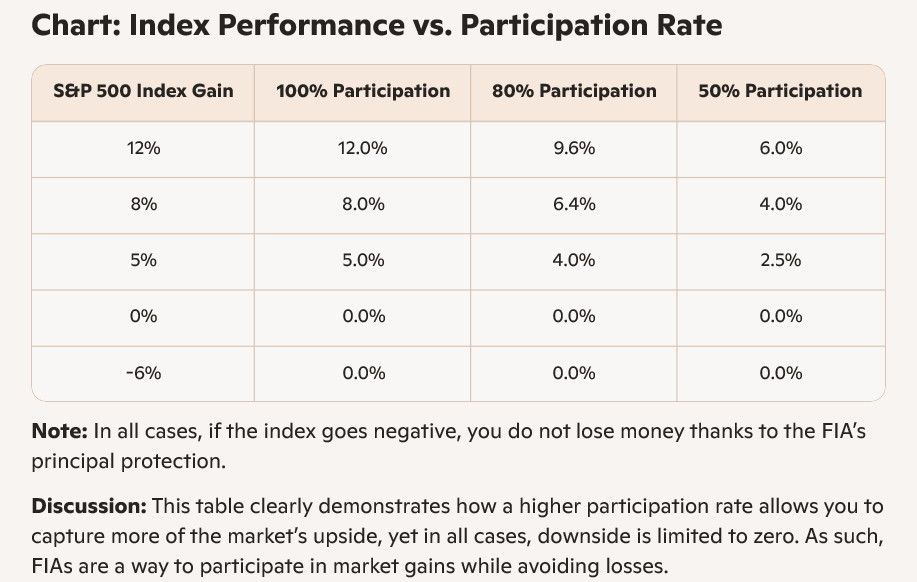
Key Takeaways - The participation rate determines how much of the index’s positive return your FIA credits you each year. - A higher participation rate means more upside growth, but it’s always paired with downside protection—your principal never shrinks due to market losses.
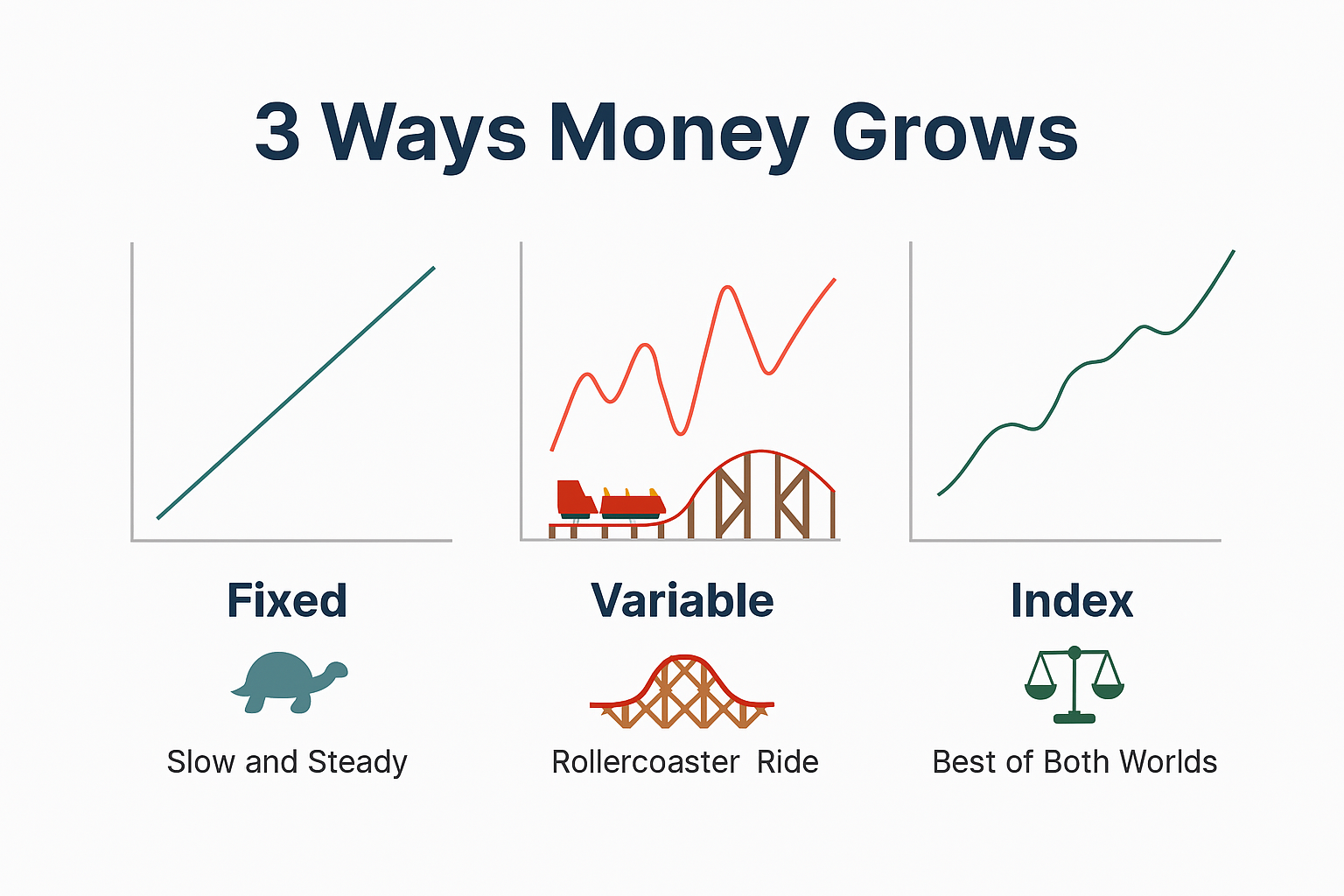
You earn when the market goes up, but you’re protected from losses when the market goes down.
By Chante Denis • September 28, 2025
Imagine you’re climbing a mountain. With stocks, you can climb fast—but you risk falling off the cliff. With a savings account, you’re safe, but you barely move upward. With an FIA, you climb steadily, and if you slip, there’s a safety harness that prevents you from falling below where you started.
Show More