


M1 vs. M2: A Clear Guide to Money-Supply Measures

Chante Denis • September 29, 2026

Share this article

Blue and gold finance illustration with cash, cards, coins, and documents on a circular platform

M2 vs. M3 Money Supply: What’s the

Difference?

M2 and M3 are broad measures of the money supply, ranked by liquidity. M focuses on money that households and businesses can access relatively easily. M is broader: it adds larger deposits and other short-term, money-like assets that are generally less convenient for everyday payments.


The measures are nested, not additive. M2 includes M3; you do not add M2 and M3 together.

Quick answer: M2 vs. M3

Measure What it generally includes Liquidity Current U.S. status
M2 M plus small denomination time deposits and retail money-market fund balances Relatively liquid Published by the Federal Reserve in its H.6 release
M3 M plus broader institutional and large denomination near-money assets Less liquid and more institutional No longer published officially by the Federal Reserve since 2006

The exact components vary by country. The table describes the standard U.S. distinction.

What does liquidity mean?

Liquidity is the ease and speed with which an asset can be used for payment or converted into spendable money without a significant loss in value. Cash is highly liquid because it can be spent immediately. A savings deposit is fairly liquid, while a large institutional deposit or repurchase agreement is more specialized and may require an additional step before it supports spending.

This is why monetary aggregates are often described as layers: the inner layer contains the most spendable forms of money, and outer layers include assets that are still close to money but less convenient for everyday transactions.

What is M2 money supply?

In the United States, M2 is M1 plus small-denomination time deposits and retail moneymarket mutual fund shares. 1 The Federal Reserve defines small-denomination time deposits as deposits issued in amounts of less than $100,000. 

In simplified terms, U.S. M2 includes currency held by the public, transaction deposits, savings and other liquid deposits included in M1, small-denomination time deposits such as qualifying certificates of deposit, and retail money-market mutual fund balances.

“M2 equals cash plus checking plus savings” is useful shorthand, but not a complete statistical definition. The Federal Reserve’s published series uses specific categories, adjustments, and reporting rules.

What is M3 money supply?

M3 is a broader monetary aggregate that includes M2 plus larger and more institutional forms of near-money. Depending on the country and methodology, these may include large-denomination time deposits, institutional money-market fund balances, repurchase agreements, and other short-term liquid instruments.

A simplified U.S.-style description is:

M3 ≈ M2 + large deposits + institutional money-market funds + selected short-term institutional assets.

These assets matter to financial markets, but they are generally less central to everyday household spending than the deposits and retail funds captured in M2.

Why did the Federal Reserve stop publishing M3?

The Federal Reserve stopped publishing the U.S. M3 aggregate on March 23, 2006. It also discontinued publication of several M3 components, including large-denomination time M2 ≈ M3 + large deposits + institutional money-market funds + selected short-term institutional assets. deposits, repurchase agreements, and Eurodollars, while continuing to publish institutional money-market mutual funds as a memorandum item.

The Fed said M3 did not appear to provide additional information about economic activity beyond what was already contained in M2. It also concluded that the cost of collecting and publishing the underlying data outweighed the benefits for monetary policy.

The assets did not disappear. The change means that the Federal Reserve no longer publishes one official U.S. aggregate that combines them in the former M3 format.

Does the euro area still use M3?

Yes. The European Central Bank continues to publish euro-area monetary aggregates, including M3.

The ECB’s definition is not identical to the former U.S. M3 definition. In the euro area, M3 includes M2 plus repurchase agreements, money-market fund shares or units, and debt securities issued by monetary financial institutions with a maturity of up to two years. 

This difference matters: M2 and M3 are not globally standardized labels with identical components. Always check the definition used by the institution publishing the data.

Historical Federal Reserve policy shifts and quantitative tightening

The relationship between money-supply measures and monetary policy becomes clearer when viewed through the Federal Reserve’s balance-sheet history. The Fed primarily adjusts its policy stance through the federal funds rate, but it has also used large-scale asset purchases and balance-sheet runoff when financial conditions or short-term interest rates made conventional policy less effective.

From the 2008 crisis to quantitative easing

During the Global Financial Crisis, the Federal Reserve cut the federal funds rate to an effective floor of 0% to 0.25% by the end of 2008. It then began buying large quantities of agency debt, mortgage-backed securities, and longer-term Treasury securities. These purchases were intended to push down longer-term borrowing costs and improve financial conditions.

The Fed expanded or maintained its holdings through several later programs. The 2010  second round of large-scale asset purchases added longer-term Treasury securities, while the 2012 third program combined mortgage-backed-security and Treasury purchases. The aim was not simply to “print money,” but to influence interest rates, market functioning,  and the transmission of monetary policy after short-term rates had reached very low levels.

These actions increased reserve balances and expanded the Federal Reserve’s balance sheet. They also occurred alongside changes in bank lending, household saving, fiscal policy, and the broader financial system. For that reason, a larger Fed balance sheet does not translate one-for-one into a specific increase in M2 or into a guaranteed amount of inflation.

Recent Posts

Jasmine Rush
By Chante Denis • September 28, 2026
Meet Jasmine Rush, the Navy veteran behind Speaking From the Lens, Mission to Momentum, and Speaking Beyond the Lens—businesses built around storytelling, strategy, advocacy, and legacy.

By Manus AI • September 16, 2026
Compare public, private, permissioned, consortium, and hybrid blockchains across access, privacy, security, governance, cost, scalability, and use cases. Learn which architecture fits your organization.

When you deposit money into your bank account, have you ever wondered: Is my money just sitting...
By Chante Denis • January 22, 2026
Learn what fractional reserve banking is, how it works, and why it matters—explained in plain English with simple examples.
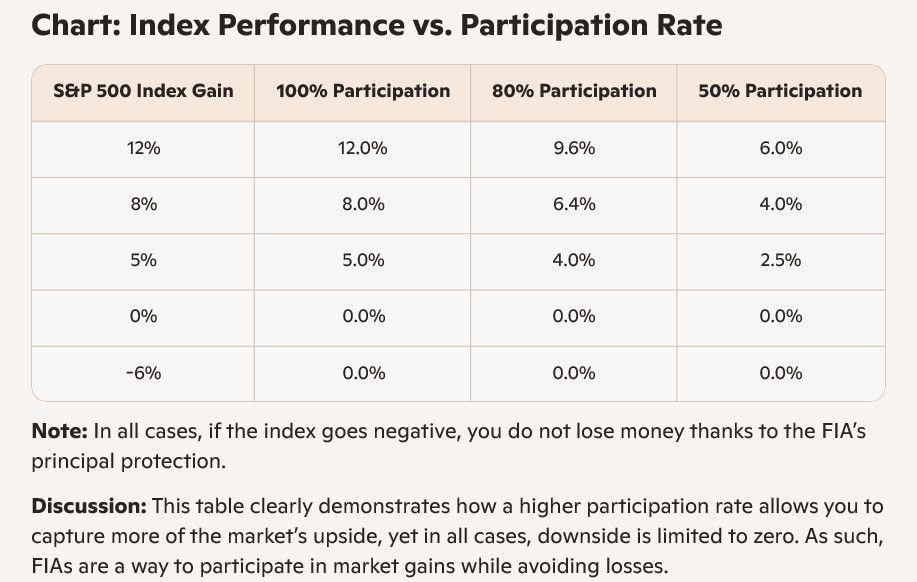
FIA returns explained
By Chante Denis • October 1, 2025
Key Takeaways - The participation rate determines how much of the index’s positive return your FIA credits you each year. - A higher participation rate means more upside growth, but it’s always paired with downside protection—your principal never shrinks due to market losses.
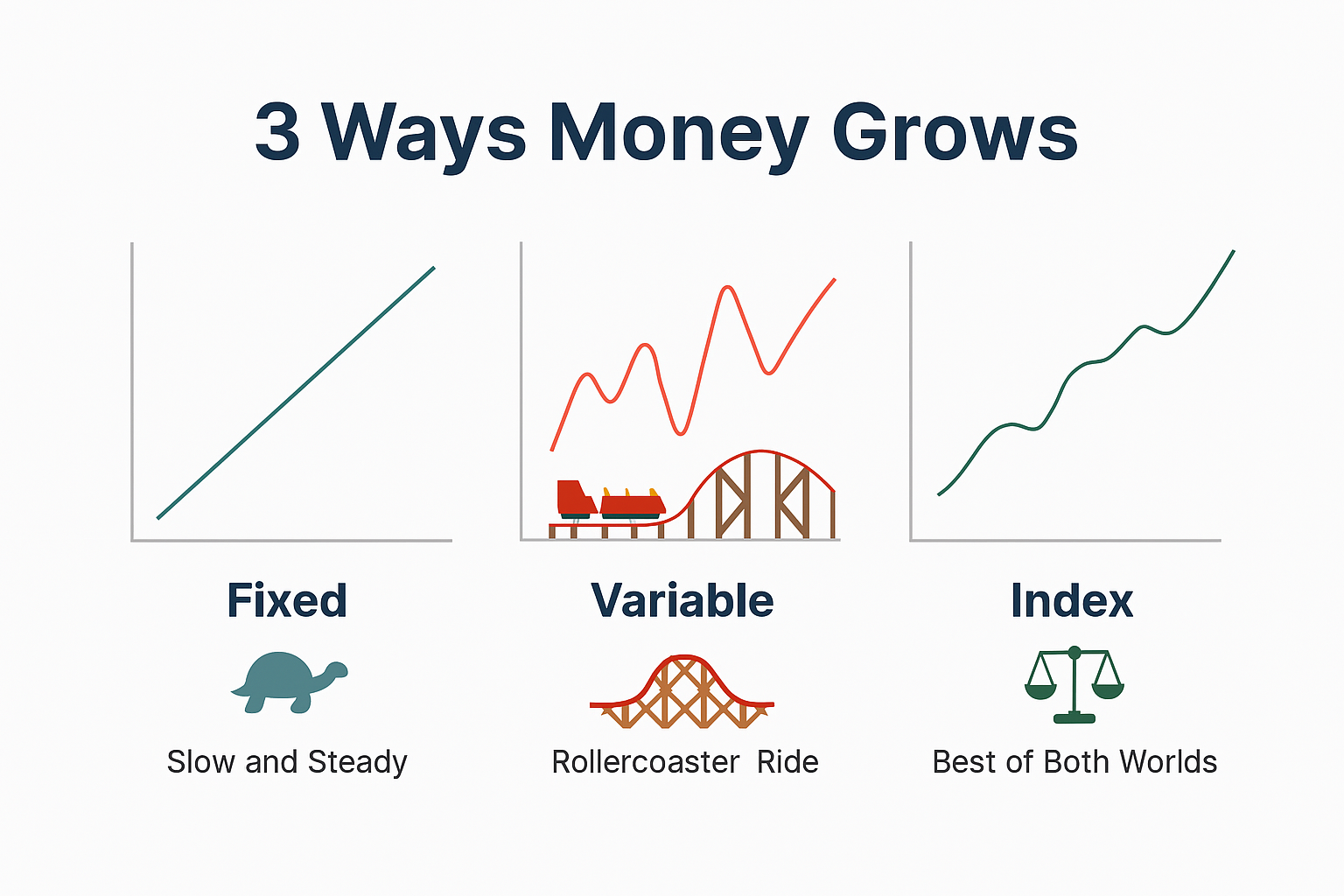
You earn when the market goes up, but you’re protected from losses when the market goes down.
By Chante Denis • September 28, 2025
Imagine you’re climbing a mountain. With stocks, you can climb fast—but you risk falling off the cliff. With a savings account, you’re safe, but you barely move upward. With an FIA, you climb steadily, and if you slip, there’s a safety harness that prevents you from falling below where you started.

Why a Trust Beats a Will
By Chante Denis • September 24, 2025
“Thinking about estate planning? Find out why a trust is smarter than a will. Explore the advantages, from avoiding probate to protecting loved ones.”

If your name is on the title, deed, or account, you’re exposed. Taxes, lawsuits, creditors
By Chante Denis • September 20, 2025
"The wealthy don’t play the same game… they play a smarter one. 💼 Own nothing. Control everything. ✅ Protect your assets from taxes, lawsuits, and creditors. ✅ Enjoy them as if they were yours. ✅ Pass them on without the headaches. Every year you wait could mean thousands lost to taxes. Learn how to structure your...

FEEL BETTER. HEAL BETTER.
By Chante Denis • September 7, 2025
Led by a Certified Cryotherapies (CCT), Glacier Chill provides both onsite and mobile cryotherapy services, bringing the benefits of cutting-edge recovery right to you. Whether you’re an athlete pushing your limits, a busy professional combating stress, or someone looking for natural pain management

By Chante Denis • August 31, 2025
Fixed Index Annuities aren’t for everyone—but if you value principal protection, tax-deferred growth, and steady compounding without fees, they deserve a serious look. Your account manager may not tell you about them. But we will.

By Chante Denis • August 30, 2025
Business owners know one thing for certain: employees are the backbone of success. But taking care of them with the right benefits package often feels like walking a tightrope between affordability and quality. Traditional employee benefits come with hidden costs—
Show More