
Protecting Your Team and Your Enterprise: How Portable Voluntary Benefits and Continuity Planning Strengthen Small Businesses

November 28, 2026

Target Audience: Small-business owners, founders, and HR decision-makers

Small-business owners face a persistent operational tension: competing for skilled talent against larger corporations while protecting the financial stability of the enterprise itself. Rising benefit costs make traditional employer-funded packages harder to sustain, yet neglecting workforce support increases turnover. At the same time, many owners pour decades into building company value without a formal mechanism to protect that value if a key leader is suddenly lost.


Addressing both challenges does not require overextending payroll. By pairing portable voluntary employee benefits with structured business continuity planning, small-business owners can support their workforce today while safeguarding the long-term resilience of the company.

Strengthening Retention with Portable Voluntary Employee Benefits

Employees increasingly evaluate total compensation beyond base salary, placing high value on financial security and flexible protection options. For small businesses operating on disciplined margins, voluntary employee benefits offer a practical middle ground: they expand your benefits package without adding permanent, open-ended employer liability.


At Master Wealth Builders LLC, the voluntary benefits implementation process is structured to minimize administrative friction for leadership and HR teams:


  • Guided Enrollment: We work directly with employers during benefits enrollment to educate employees on their available options in plain language.


  •  Clear Documentation: Every employee's individual benefit selections are documented accurately to avoid administrative gaps.


  • HR Payroll Coordination: We coordinate streamlined payroll deductions directly through your HR or payroll contact.


  • Built-In Portability: If an employee eventually leaves the company, they can continue their coverage by assuming payments directly. The employee retains valuable protection, and the business avoids ongoing administrative or financial obligations after separation.

Evaluate Your Company's Benefit Options

Looking to offer competitive, portable benefits without straining your operating budget?

Complete our brief Financial Eligibility Form or schedule a complimentary Strategy Consultation with Master Wealth Builders LLC to review structures tailored to your team size.

Closing the Business Continuity Gap

While employee benefits help stabilize day-to-day operations, business continuity planning protects the enterprise from sudden leadership or ownership disruptions.


Industry data highlights how widespread this vulnerability remains:


  • According to Guardian's research on small-business owners, only 30% carry key person insurance and just 24% have a formal buy-sell agreement in place.


  • A 2026 Chase study noted that while 40% of small-business owners plan to retire within the next decade, 70% do not yet have a formal exit plan.


Two foundational strategies help close this exposure:


  • Key Person Insurance: Provides the business with dedicated liquidity if a founder, top rainmaker, or indispensable executive passes away unexpectedly. Those funds can help offset temporary revenue disruption, reassure lenders and vendors, and cover the cost of recruiting and training a replacement.


  • Business Succession Planning: Establishes a clear roadmap—and funding mechanism—for transferring ownership due to retirement, disability, or death. Properly structured succession funding helps prevent forced liquidations and protects both the owner's family and remaining business partners.

Practical Illustration: Aligning Workforce and Continuity Strategy

The following scenario is an educational illustration only; individual business structures, underwriting eligibility, and financial outcomes vary.


Consider a 15-employee regional service firm led by two co-founders and a senior operations director who manages major client accounts.


  • The Workforce Challenge: The firm wants to improve retention but cannot absorb a major increase in fixed health-benefit premiums. By introducing portable voluntary benefits coordinated through payroll deduction, employees gain access to supplemental protection they can take with them if they ever leave—improving perceived compensation with minimal employer overhead.


  • The Continuity Challenge: If either co-founder or the operations director were suddenly unable to work, the firm would face immediate client-retention risk and potential buyout disputes. By implementing key person insurance on the operations director and funding a buy-sell succession agreement between the two co-founders, the firm establishes a clear financial buffer to maintain operations and execute an orderly transition.


Together, these measures align the interests of employees, partners, lenders, and the owners' families under one cohesive financial framework.

Three Practical Steps to Get Started


  • Audit Key-Person Dependency: Identify the one to three individuals whose sudden absence would immediately disrupt revenue, client relationships, or daily operations.


  • Review Existing Agreements: Confirm whether your operating agreement includes a current buy-sell provision—and verify how that buyout would actually be funded.


  • Assess Voluntary Benefit Gaps: Survey your team before your next enrollment cycle to identify which supplemental, portable protections would add the most value to their households.

Schedule Your Business Strategy Consultation


At Master Wealth Builders LLC, our mission is to empower individuals and business owners to make fiscally responsible decisions today for the lifestyle they want tomorrow. Whether you are evaluating portable voluntary employee benefits, key person coverage, or a long-term business succession strategy, an educational Strategy Consultation provides a clear, no-obligation review of your options.


About the Author

TK Pryor is a Wealth Strategist, Licensed Life Insurance Agent, and National Insurance Producer (NPN: 20792049), and the founder of Master Wealth Builders LLC (8201 Greensboro Drive, Suite 350, McLean, VA 22102 | Office: 571-587-8167 | Cell: 346-212-5297).


Educational Disclosure: This article is provided for informational and educational purposes only and does not constitute legal, tax, or investment advice, nor does it guarantee specific financial outcomes. Insurance product availability, features, and eligibility are subject to underwriting and applicable state regulations. Consult qualified legal and tax professionals regarding your specific business agreements.

Share...

November 9, 2026
Discover how AI and cryptocurrency payment processing can improve business efficiency, reduce costs, automate operations, enhance customer experiences, and support long-term growth.

Hand holding a stylus over glowing business charts and analytics dashboard
November 3, 2026
Master Wealth Builders LLC is an education-first financial consulting firm led by TK Pryor, Wealth Strategist and Licensed Life Insurance Agent. It helps families, professionals, entrepreneurs, and business owners keep more of the money they make — and multiply more of the money they have— through coordinated retirement, insurance, tax, mortgage, and business strategy.

Glowing justice scales over a glass skyscraper at dusk in a modern city skyline
November 3, 2026
For modern business owners, the hardest decisions often come down to a constant tug-of-war: how do you maintain capital liquidity while simultaneously deploying enough cash to attract and retain top-tier talent? ​Most conventional financial advice treats these as competing interests. If you spend on elite employee benefits, your balance sheet shrinks. If you hoard cash to protect liquidity, you lose key executives to competitors. ​At Master Wealth Builders LLC, we reject this retail mindset. We help scaling enterprises implement institutional-grade financial strategies that solve both problems simultaneously—without disrupting cash flow. ​By restructuring how your business leverages capital and manages employee wellness, you can transform standard corporate expenses into wealth-building engines. Here is the framework we use to optimize our clients' capital and benefits architecture.

Calculator, eyeglasses, pen, and chart papers on a desk with a plant
September 30, 2026
Learn how to calculate your net worth using a simple assets-minus- liabilities formula. See two examples, common mistakes, tracking tips, and free online calculators.

Nested money-supply layers showing cash, bank deposits,
and institutional near-money assets.
By Chante Denis • September 29, 2026
What is the difference between M2 and M3 money supply? Learn what each includes, how liquidity works, how Fed QE and QT affect financial conditions, why the Fed stopped publishing M, and how the ECB defines M.

Jasmine Rush
By Chante Denis • September 28, 2026
Meet Jasmine Rush, the Navy veteran behind Speaking From the Lens, Mission to Momentum, and Speaking Beyond the Lens—businesses built around storytelling, strategy, advocacy, and legacy.

By Manus AI • September 16, 2026
Compare public, private, permissioned, consortium, and hybrid blockchains across access, privacy, security, governance, cost, scalability, and use cases. Learn which architecture fits your organization.

When you deposit money into your bank account, have you ever wondered: Is my money just sitting...
By Chante Denis • January 22, 2026
Learn what fractional reserve banking is, how it works, and why it matters—explained in plain English with simple examples.
FIA returns explained
By Chante Denis • October 1, 2025
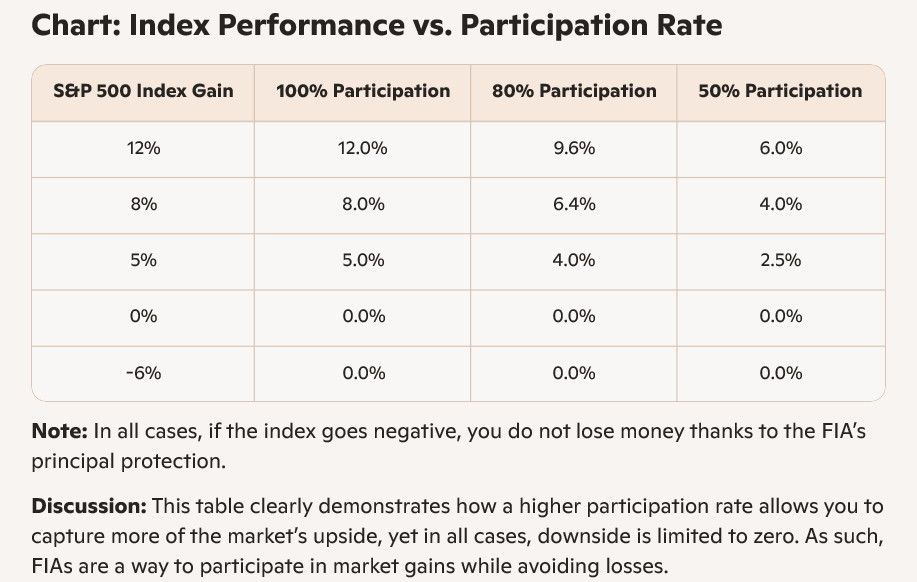
Key Takeaways - The participation rate determines how much of the index’s positive return your FIA credits you each year. - A higher participation rate means more upside growth, but it’s always paired with downside protection—your principal never shrinks due to market losses.
You earn when the market goes up, but you’re protected from losses when the market goes down.
By Chante Denis • September 28, 2025
Imagine you’re climbing a mountain. With stocks, you can climb fast—but you risk falling off the cliff. With a savings account, you’re safe, but you barely move upward. With an FIA, you climb steadily, and if you slip, there’s a safety harness that prevents you from falling below where you started.
Show More